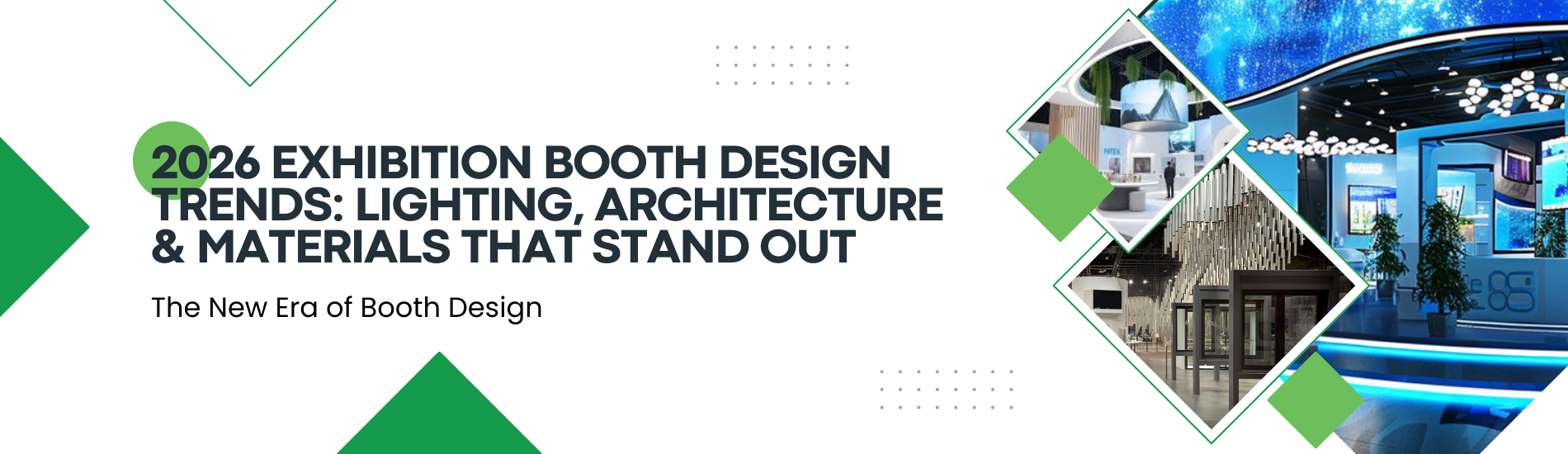
2026 Exhibition Booth Design Trends: Lighting, Architecture & Materials That Stand Out
The New Era of Booth Design
At a crowded exhibition, the distinction between a stand that grabs attention and one that passes unnoticed can be a matter of design.
Every day, visitors pass by hundreds of stands. Most make a decision to stop or go by each stand in a matter of seconds. According to studies, 76% of people who attend trade shows claim that booth design affects their choice to visit a booth. This is where design stops being visual and starts becoming decisive.
In 2026, exhibition booth design trends are moving beyond simple set up. Lighting, architecture, and materials are now used to create a complete experience. The successful exhibitors are not just designing stands; they are designing an experience that captures attention, creates curiosity, and facilitates conversations.
Understanding these design changes can help exhibitors create stands that not only look great but also function more effectively.
Booth Design Is Now Part of the Strategy
For many years, the formula for booth design was straightforward: big graphics, strong branding, and products. Although all of these things are important in today’s environment, exhibitors are asking a different question:
How can the booth be designed to be remembered?
Trade shows are one of the few marketing venues in which you have face-to-face interaction with decision-makers. In that moment, the physical space is not just a backdrop. It becomes part of the interaction. The way a booth is designed can influence how long someone stays, where they look, and whether a conversation even begins.
A well-designed booth can:
• draw people in from across the aisle
• encourage visitors to step inside rather than simply walk past
• create a space that drives meaningful conversations
Lighting Trends in Exhibition Booth Design
Lighting has become one of the most important tools in modern exhibition stand design. It is no longer just for lighting an exhibition stand; it is actually for creating a path for visitors.
Integrated Lighting Systems
Exhibition stands in 2026 are designed in a way that integrates lighting into their design. LED lights are placed in a frame or on a ceiling to create a lighted edge.
These systems in exhibition stand design are beneficial because they eliminate the need for a separate lighting setup.
When people look around an exhibition hall, naturally lit exhibition stands stand out. This visibility is important because research has shown that nearly 48% of trade show attendees say that the primary reason they visit a booth is that it is eye-catching.
Unlike before, where graphics were just printed and placed in an exhibition stand, backlit graphics are being used in modern exhibition stand design.
Layered Lighting Design
Effective booths rarely have just one light source. Designers are increasingly using what is called "layered lighting."
For instance:
• Ambient lighting sets the general mood
• Focused lighting highlights the displays
• Feature lighting highlights the logos, the entry points, etc.
Layered lighting can actually help guide the visitors' eyes to the important areas of the booth.
Lighting for Social Sharing
Another developing trend is booth design with social media in mind. It is no longer just about how a stand looks on the exhibition floor, but also how it translates on screen.
For example, the use of well-lit booths for photography sessions is becoming increasingly popular. These days, exhibitors purposefully create "camera-friendly" areas in their displays, where backdrop elements, lighting, and angles combine to produce eye-catching shots.
These spaces often include:
• well-lit logo walls or branded backdrops
• clean, uncluttered backgrounds for photos and videos
• lighting angles that reduce shadows and enhance visibility
• designated spots that naturally encourage visitors to pause and capture moments
Additionally, this strategy modifies visitor behavior. Visitors become active players who increase the brand's visibility rather than passive observers. A single shared post can reach people that the brand would not have otherwise reached, extending the booth's impact well beyond the show floor.
In this way, lighting allows the brand to be amplified digitally in addition to improving the actual location.
Architectural Design Is Becoming More Experiential
The physical design of exhibition booths is also changing. The traditional boxed booth with hard walls is slowly giving way to a more open and fluid design.
Open Booth Concepts
The first thing that is noticed when attending a modern exhibition is the open booth concepts.
Booths are becoming less cluttered and more accessible from any direction. Gone are the days when the visitor had to enter the booth through a doorway. The open booth concept allows the visitor to move freely through the booth.
There are two benefits to this design:
- The first is that it generates more traffic because the booth looks more inviting rather than closed off.
- The second is that conversations begin more naturally because the visitor is able to pass through the booth.
Spaces Designed for Interaction
Another thing that has changed is how booths are internally laid out.
Instead of filling a booth with displays, exhibitors are using the space to create opportunities for interaction. This might mean:
• Demonstration areas
• Small discussion areas
• Seating areas
• Interactive screens
The idea is to get visitors to stay for a longer time so meaningful conversation will take place.
Exhibition Booth Materials Shaping Modern Design
Materials are one of the key aspects of the booth’s feel. The industry is moving away from disposable builds towards more intelligent and sustainable material use.
Sustainable Materials
Sustainability is now one of the key factors in exhibition stand design. Many exhibitors are now opting for materials that can be reused for multiple events.
Common sustainable materials now include:
• Recycled aluminium frameworks
• Sustainable wooden panels from environmentally friendly suppliers
• Fabric graphics rather than rigid printed boards
• Lightweight materials to minimise transportation impacts
These materials allow companies to reflect their overall sustainability strategies in their exhibition stands.
Modular Booth Construction
Modular booth systems are increasingly becoming a preferred solution in modern exhibition booth design because they allow brands to adapt their stands for different events.
For instance, instead of constructing a separate stand for each occasion, the exhibitor is opting to purchase a stand that is adjustable. A modular stand could be expanded for a large international exhibition and reduced in size for a smaller regional exhibition.
There are several advantages to this system:
• Cost savings
• Time-saving
• Consistency in branding
Natural Textures and Warm Materials
Another change in the design of the booths is the increasing trend towards the use of natural textures.
Trade shows are environments that are very industrial in nature, with concrete floors and metal structures. In order to reduce this, there is a trend towards the use of natural textures, such as wood, fabric, and greenery, and also the use of cork.
There is a positive response towards a space that is comfortable, as opposed to a corporate space.
Creating a Complete Brand Experience
Perhaps the most significant shift in exhibition design is the emphasis on multi-sensory experience.
The modern visitor expects more than a display of static information. They respond to environments that offer a combination of visual design, interactivity, and atmosphere.
A good booth design might include:
• Atmospheric lighting
• Tactile materials
• Digital demonstrations
• Discussion areas
If all of these components are successful, the booth is no longer simply a display area, but a space where natural and interesting conversations take place.
And, of course, that is what exhibitions are all about.
Final Thoughts
The latest exhibition booth design trends in 2026 clearly show a shift toward engagement-focused spaces rather than purely visual displays. In a setting where every booth is competing for attention, design becomes the first point of connection between the brand and the visitor.
A successful booth is no longer just about appearance, but about how intentionally it is designed to guide attention, influence movement, and create opportunities for meaningful engagement.
Latest Blogs

Jan 28,2025
Discover the Top 10 Exhibitions in Frankfurt 2025
Upcoming Trade Shows , Upcoming exhibitions
© Copyright by FOUNTAINHEAD INTERNATIONAL B.V. || Designed and maintained by S2code