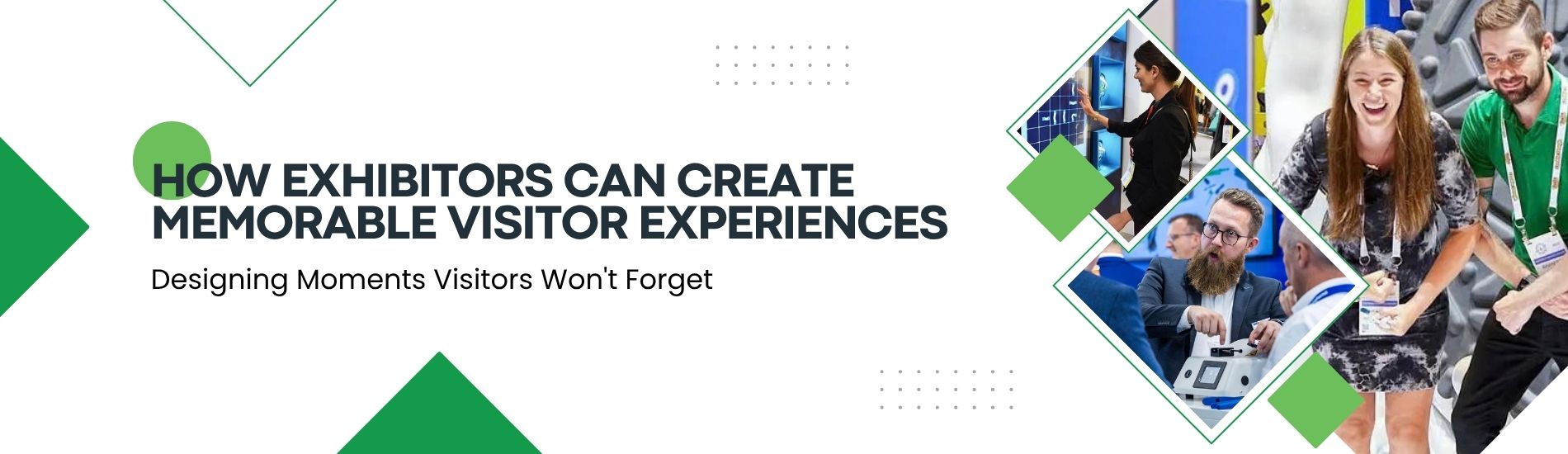
How Exhibitors Can Create Memorable Visitor Experiences
How Exhibitors Can Create Memorable Visitor Experiences
Attendees walk past dozens, sometimes hundreds, of booths at a major trade show. Most of them blur together by the end of the day — a wall of logos, brochures, and near-identical pitches. The stands people actually remember are the ones that gave them something to do, not just something to look at.
This matters more than it might seem. Research from recent experiential marketing studies has found that the majority of live-event attendees recall brands they actively engaged with on-site, and a similar majority report increased purchase intent after interacting with a brand at an event. Passive viewing rarely produces either effect. Participation does.
Passive Booths Get Forgotten; Interactive Ones Get Remembered
The single biggest driver of memorability is participation over observation. Industry research from the Center for Exhibition Industry Research found that interactive exhibits are significantly more likely to stop attendees in their tracks than static displays, and separate studies show a large majority of attendees say interactive displays meaningfully affect how engaged they feel at a show. A brochure gets glanced at and discarded. A live demo, a hands-on configurator, or a short guided experience gets talked about — sometimes on the walk to the next booth, sometimes weeks later when the decision gets made.
This doesn't require elaborate technology. A working product demo, a simple interactive touchscreen, or a short guided challenge at the stand can be enough, as long as it invites the visitor to do something rather than simply watch.
Design for More Than One Sense
Most booths are designed purely for the eyes — graphics, lighting, signage. But sensory memory is powerful, and stands that engage sound, touch, or even scent alongside sight tend to leave a stronger impression than visuals alone. A tactile product sample, ambient sound that reflects the brand, or a physical material visitors can hold all add a layer of memory that a flat graphic panel can't replicate.
The goal isn't sensory overload — it's giving visitors a reason to physically interact with the stand rather than just glance at it.
Let the Booth Tell a Story, Not Just Display a Logo
Booths that stick in memory usually have a narrative thread rather than a scattered collection of graphics. That might mean a layout that walks visitors through a process — from problem to solution — or a central visual concept that ties the whole stand together. Storytelling gives visitors context for why the interactive elements matter, rather than presenting activities and information as disconnected pieces.
This is also where brand identity does real work. Colours, materials, and layout that consistently reflect the same story across every touchpoint make the experience feel intentional rather than assembled from a catalogue.
Staff Conversations Are Part of the Experience
The best-designed stand still depends on the people running it. Visitors respond to staff who ask genuine questions — what brought them to the show, what problem they're trying to solve — rather than launching into a rehearsed pitch. That shift, from broadcasting information to holding a real conversation, is often what separates a forgettable interaction from a memorable one.
Simple open-ended prompts work better than scripted lines: they let the visitor lead, and they let staff tailor the conversation to what actually matters to that person, rather than repeating the same pitch to everyone who walks by.
Give People Somewhere to Slow Down
Not every memorable moment needs to be high-energy. Comfortable seating, a quiet consultation area, or a hospitality corner gives visitors permission to stay longer without feeling like they've committed to a hard sell. Longer dwell time, even in a low-key setting, tends to produce more meaningful conversations than a five-second interaction squeezed in on the way to the next booth.
This matters particularly for shows with senior decision-makers, who are often more interested in a genuine conversation than a flashy activation.
Make the Experience Worth Sharing
A meaningful share of attendees post about their experiences on social media during a show, and interactive, photo-worthy moments are far more likely to be shared than a static backdrop. A well-designed activation — something visually distinctive, personal, or simply fun to be photographed at — extends the booth's reach well beyond the people who physically visited it, and gives your team a natural reason to follow up referencing the moment.
Memorability Should Serve the Business Goal, Not Replace It
It's worth noting that a memorable experience isn't valuable in isolation — it needs to connect back to the reason you're exhibiting. An activation that draws a crowd but doesn't create a natural opening to qualify visitors or capture their details is entertainment, not marketing. The strongest experiences are designed so the memorable moment and the lead-generation moment happen at the same time — a demo that naturally leads into a conversation, a game that ends with a genuine follow-up question.
Designing Experiences That Actually Stick
Creating a memorable visitor experience isn't about the biggest screen or the most expensive activation on the floor. It's about giving people something to participate in, engaging more than one sense, telling a coherent story, and making sure the staff conversations that follow are as considered as the design around them.
Fountainhead International B.V. designs exhibition stands with exactly this kind of engagement in mind — spaces built to invite participation, not just attention. If your next show needs a stand that visitors actually remember after the doors close, we can help you design it.
Latest Blogs

© Copyright by FOUNTAINHEAD INTERNATIONAL B.V. || Designed and maintained by S2code